On 15 January 2026, the New Zealand planning framework saw more changes with the commencement of ten national direction instruments. This “January Tranche” includes two new National Environmental Standards (NES), four new National Policy Statements (NPS), and four amended NPS. While these documents collectively signal a move toward the Government’s Going for Housing Growth mandate, the Resource Management (National Environmental Standards for Detached Minor Residential Units) Regulations 2025 (NES-DMRU) is the change currently receiving the most public attention.
The Permitted Activity Threshold for Granny Flats and Minor Units
The new standards enable homeowners to build a detached minor residential unit (DMRU) of up to 70m² without a building or resource consent under specific conditions. This policy is designed to remove regulatory barriers, bypass local council bureaucracy, and unlock housing capacity on existing titles.
A DMRU is defined as a self-contained unit that is ancillary to, completely detached from, and held in common ownership with the principal residential unit on the same site. The permitted status applies specifically within Residential, Rural, Mixed Use, and Māori Purpose zones as defined by the National Planning Standards.
Performance Standards for Permitted Status
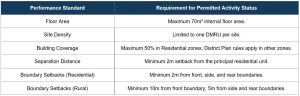
If a district plan already allows for a larger unit, such as an 80m² unit, as a permitted activity, that more lenient local rule takes precedence over the NES standard.
Why Resource Consent May Still Be Required
A common misconception is that the NES-DMRU overrides all local planning controls. It does not. The standard explicitly states that landowners must still comply with rules in the district plan that deal with matters of national importance under Section 6 of the RMA.
Heritage, Special Character, and Natural Landscapes
Local rules for historic heritage, special character, and outstanding natural landscapes remain in force. For example, a minor dwelling located within an Outstanding Natural Landscape (ONL) is subject to Section 6 matters of national importance that the NES-DMRU does not override. In such cases, the owners may initially believe they can proceed without a resource consent, but a formal application is still required to assess the visual and environmental impact of the structure on that protected landscape.
Natural Hazard Overlays
The new NPS for Natural Hazards (NPS-NH) introduces a rigorous, standardised methodology for managing risks. If a site is subject to a flood plain, coastal inundation, or land instability overlay, the permitted status of a granny flat may not apply. The NPS-NH requires all hazard risks to be assessed using a risk matrix. If a development is assessed as having a Very High natural hazard risk, Policy 3 stipulates that the risk must be avoided, creating a clear prohibitive standard for new developments in those areas.
Infrastructure and Onsite Wastewater
Infrastructure requirements remain a significant hurdle for consent-free builds. While the NES-DMRU aims to simplify the process, it does not negate the requirement for compliant servicing.
In rural or rural-lifestyle areas without reticulated services, the addition of a minor dwelling can push a site over the permitted activity threshold for onsite wastewater discharge. Most regional rules typically set strict limits on the volume of treated domestic wastewater that can be discharged into land. If the combined occupancy of the principal dwelling and the new 70m² unit exceeds these volume or area limits, a regional resource consent for discharge remains necessary. The land-use permission granted by the NES does not override these regional council requirements.
The Building Exemption Constraints
The building consent exemption under the Building Act is equally specific. To qualify, the build must be a single-storey, standalone structure using lightweight timber or steel framing. The inclusion of certain complex features will necessitate a full building consent:
- Vertical Complexity: No lofts, mezzanines, or sleeping platforms are allowed.
- Specialised Waterproofing: Level-entry (wet-floor) showers require a consent due to the risks associated with waterproof membranes.
- Mechanical Heating: Solid-fuel burners or wood burners are excluded from the exemption.
Professional Responsibility and Liability
The removal of the mandatory council inspection process for these units does not remove the requirement for the building to meet the Building Code. The legal responsibility for compliance now rests entirely with the owner and their Licensed Building Practitioners (LBPs).
Within 20 working days of finishing the build, owners must provide the council with “as-built” plans and energy safety certificates. Failing to manage this process correctly may result in a lack of compliance records, which can complicate future property valuations, insurance claims, or sale processes.
The Project Information Memorandum (PIM) is a vital tool in this new landscape. It is the primary mechanism for councils to identify site-specific constraints, such as natural hazards or significant natural areas, that might trigger a requirement for a resource consent despite the general permitted status under the NES-DMRU.
Professional Due Diligence
The January 2026 changes provide a faster pathway for intensification, but only for those who manage the shift in professional liability correctly. If you are beginning a minor unit project and want to confirm your “permitted” status before breaking ground, please reach out.
By Chris Walsh – Director | Principal Planning Consultant at Tripp Andrews